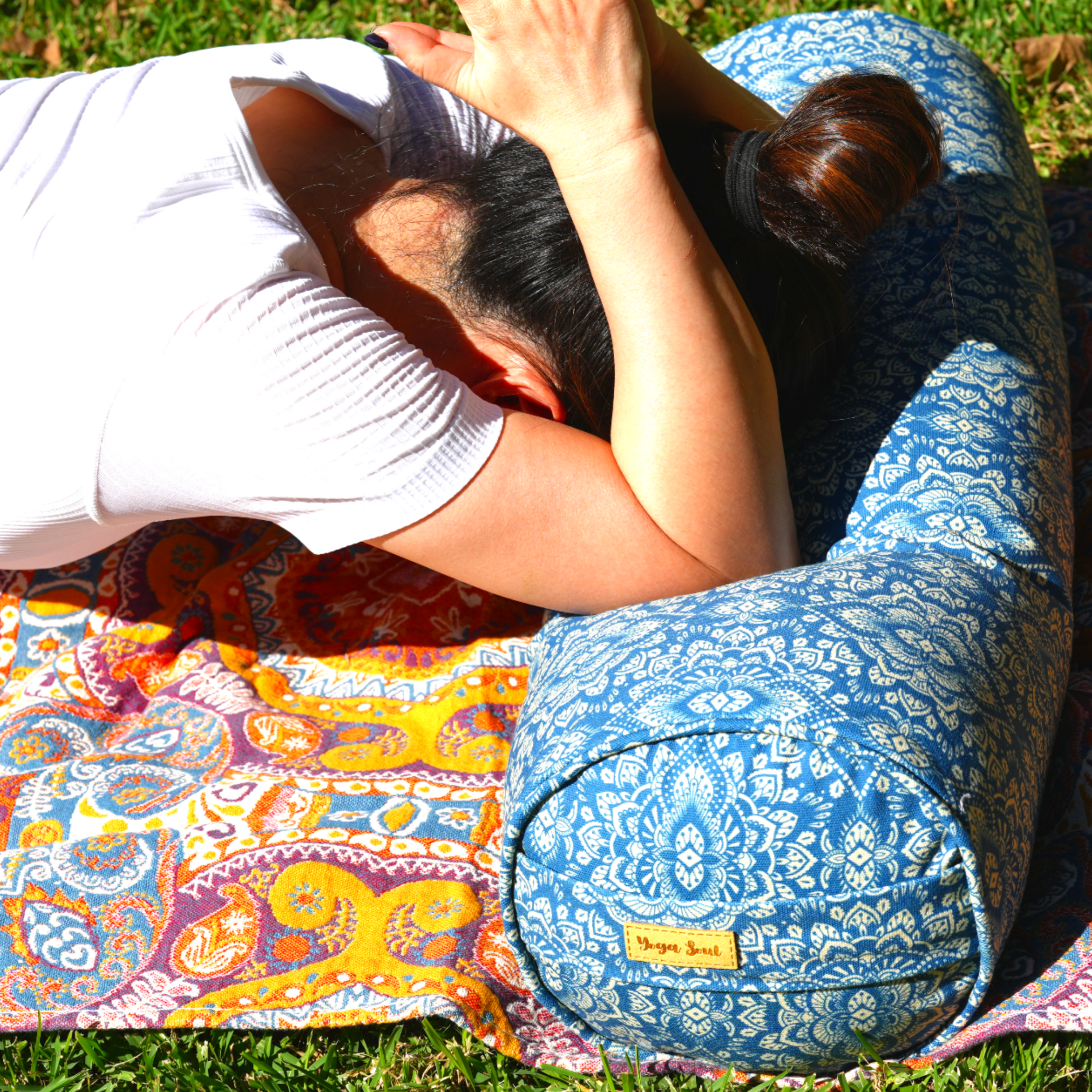
🌿How to Use a Yoga Bolster for Back Pain and Spinal Support
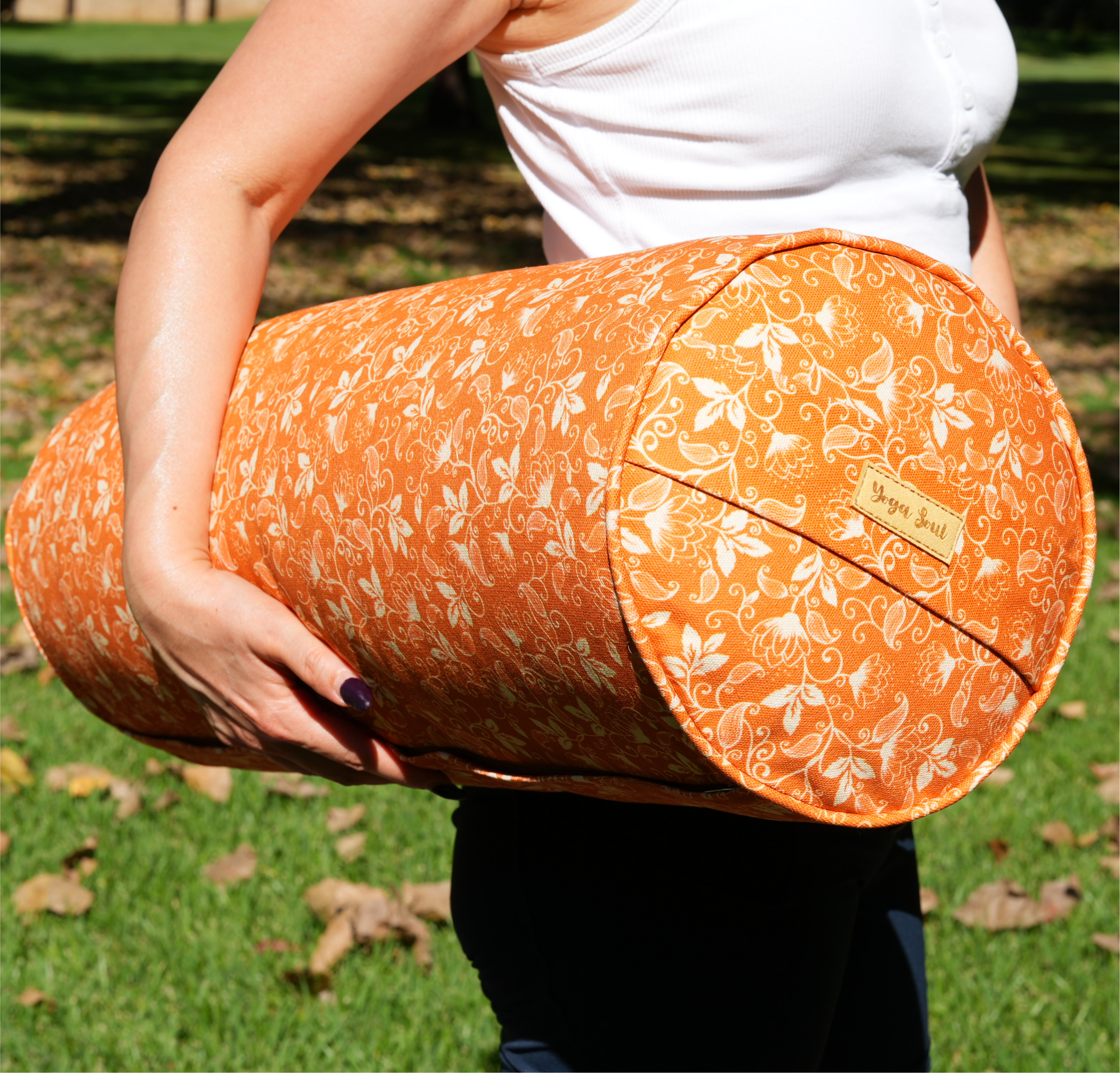
Back pain often stems from compression, daily tension, and a lack of ergonomic support. While many seek relief through intense stretching, the most effective path to recovery is often passive decompression.
A firm yoga bolster for back pain acts as a restorative tool that allows your spine to settle into its natural curves without muscular effort. By providing the floor-to-body connection your nervous system needs, a bolster helps you move from chronic discomfort to a state of ease and alignment.
🔍 Why is a Yoga Bolster Good for Back Pain?
Using a Yoga Bolster Australia provides three primary clinical benefits:
1. Spinal Decompression: Gently creates space between vertebrae.
2. Muscular Release: Signals the "guarding" muscles around the spine to let go.
3. Joint Protection: Evenly distributes body weight to reduce pressure on hips and knees.
🧘 3 Essential Poses for Spinal Support
1. The Lumbar Release (Savasana with Knee Support)
Focus: Neutralizing the lower back and releasing the psoas.
-
The Setup: Lie flat on your back and place a Round Yoga Bolster horizontally under your knees.
-
The Science: This position tilts the pelvis slightly, flattening the lumbar spine against the mat. It removes the "arch" that often causes lower back pinching, allowing the spinal discs to rehydrate and relax.
-
Hold: 10–15 minutes.
2. The Chest & Thoracic Opener (Reclined Heart Opener)
Focus: Correcting "slouching" posture and opening the upper back.
-
The Setup: Place the bolster vertically along your spine and gently lie back, supporting the head and tailbone.
-
The Science: This pose reverses the "rounded shoulders" caused by desk work. By supporting the thoracic spine, it encourages the ribs to expand, improving breathing capacity and reducing tension in the neck and shoulders.
-
Hold: 5–10 minutes.
3. The Grounded Decompression (Supported Child’s Pose)
Focus: Lower back elongation and grounding.
-
The Setup: Rest your torso lengthwise over the bolster with knees wide.
-
The Science: This pose provides a gentle traction for the lower spine while the bolster supports the weight of the torso, preventing the "pulling" sensation in the hips that beginners often feel in a traditional Child’s Pose.
-
Hold: 5 minutes.
🔍 Frequently Asked Questions
Is a yoga bolster good for back pain?
Yes. A firm bolster supports the natural curvature of the spine and allows the surrounding muscles to relax. By removing the need for the body to "hold" itself up, it facilitates deep muscular release and spinal decompression.
How does a bolster help with spinal alignment?
Alignment comes from support, not force. Using a bolster in reclined or seated positions helps the spine return to its natural S-curve, reducing the strain caused by slouching or "tech-neck."
🌸 Final Thoughts: A Foundation for Healing
In a fast-paced world, your practice should be a sanctuary. A premium, Kapok-filled bolster isn’t just an accessory—it is a foundation for a more conscious, supported life. When the body feels held and safe, true healing begins.
Ready to find relief?
[Explore our Handcrafted Yoga Bolster Collection] Designed in Sydney for deep support and spinal health. ✨ Enjoy $15 off on orders over $150 – No code needed, just checkout & save.